

Once I moved to Florida, my ignorance of lighthouses soon turned into fascination – one that led me to visit eight lighthouses across the state, climb four of them, obsess over their history enough to buy books from museum gift shops, and eventually write this blog post after speaking with one of the state’s leading lighthouse conservationists.
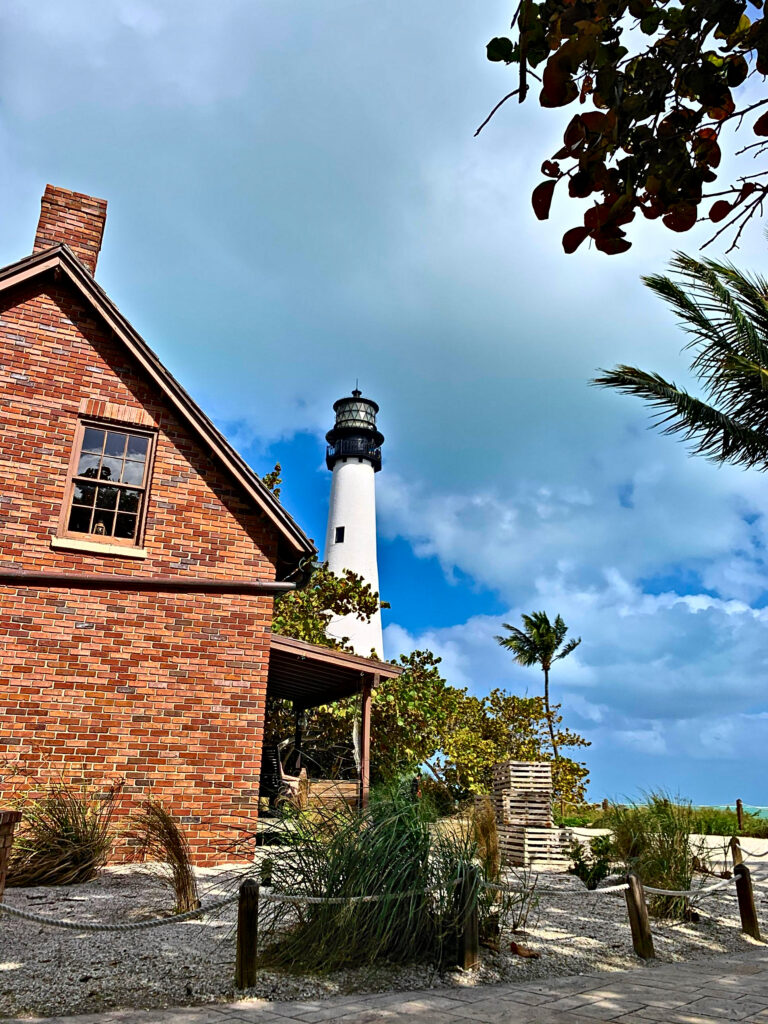
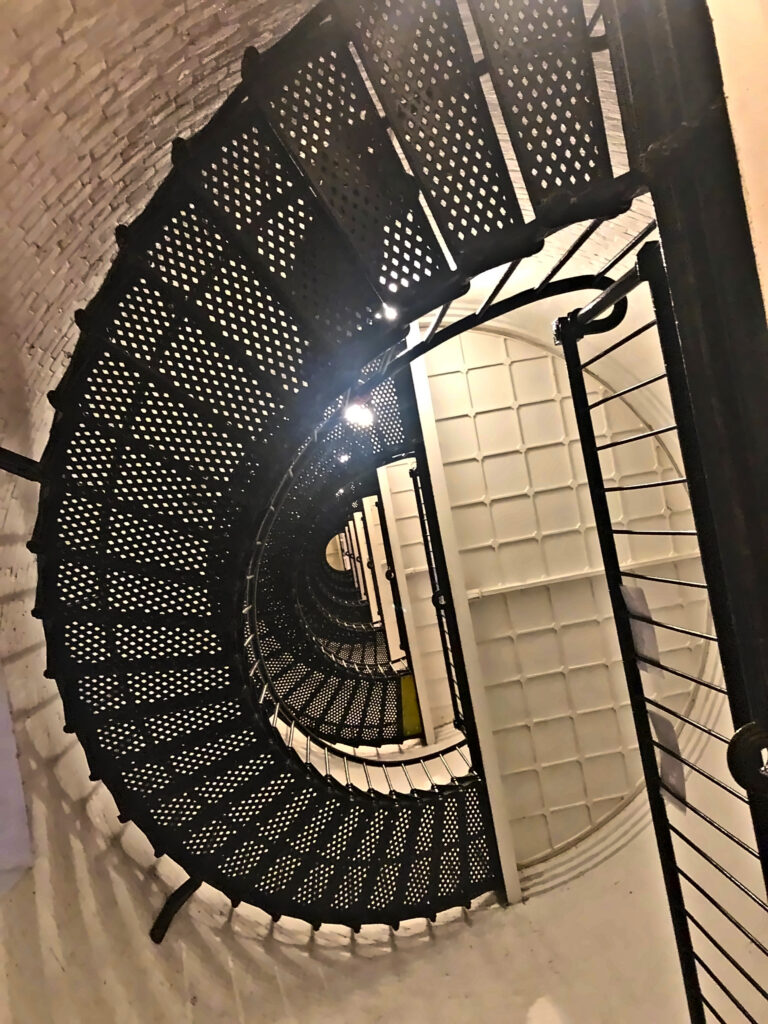
It started at the Cape Florida Lighthouse, tucked inside Bill Baggs State Park on Key Biscayne, a pristine white tower framed by a line of palm trees so photogenic I’d taken fifty pictures before I’d even joined the line to climb. I rushed up the narrow staircase, skipping steps and forgetting I had a five- and eight-year-old behind me. My husband and kids couldn’t match my excitement not because they weren’t curious, but because they were careful, holding the handrails and taking one step at a time exactly as the volunteer instructed at the beginning of the climb.
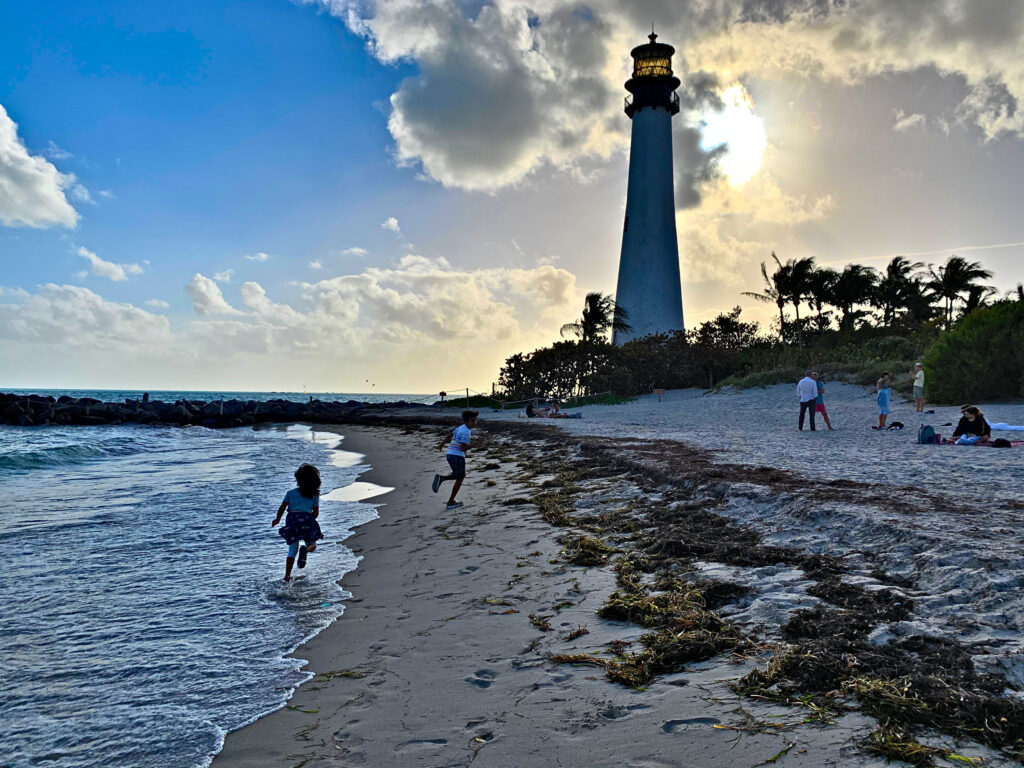
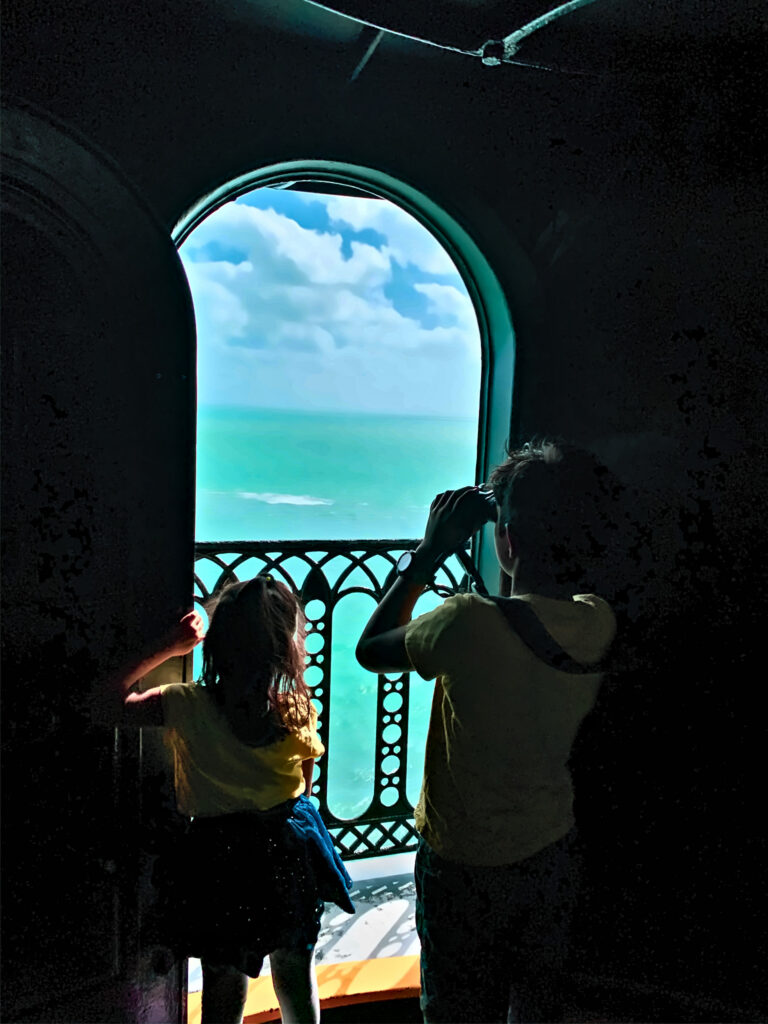
I slowed down to match their pace. At the top, I ducked through a small opening, and the view that greeted us was one no smartphone could capture. On one side lay the Atlantic, its gentle waves rolling in while the sun simmered above them. Even squinting against the glare, we could see golden rays bouncing off the ocean’s mellow swells. Far below, beachgoers carried on at their own pace, with no hurry to get anywhere. On the other side, sawgrass and swamp stretched toward the horizon, with pockets of the city tucked between palm trees and marsh. Beyond them, the Everglades ran as far as the eyes could see. It was worth the climb, and seeing four faces lit up.
Spiral Steps and Sprawling Views
Cape Florida Lighthouse was so memorable that we had already picked the next one on our drive back home from Key Biscayne. Over our six-year stay in South Florida, the kids grew taller and took on the strenuous spiral climbs with more confidence each year, and I kept hunting for the next one to climb.
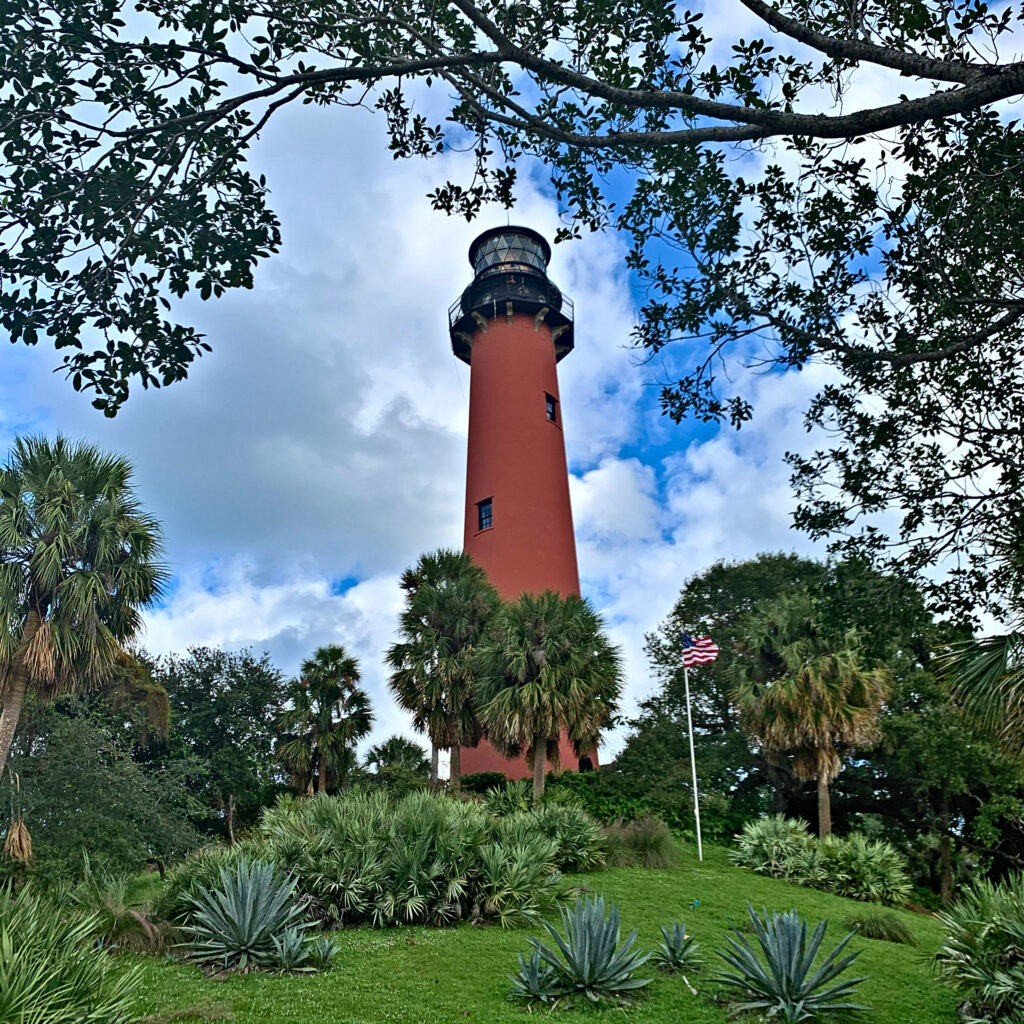
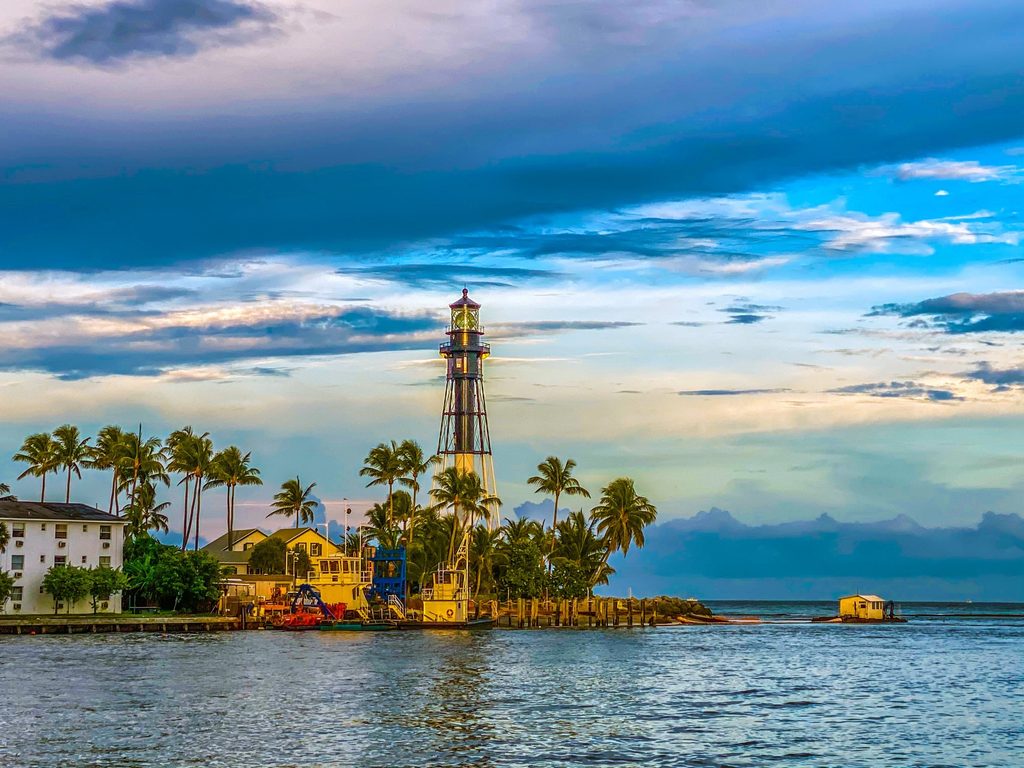
Each lighthouse we visited has its own charm. Cape Florida is one of Miami-Dade’s oldest structures. Confederates buried Jupiter’s lens in a creek during the Civil War to keep it from Union ships. Ponce de Leon Inlet is Florida’s tallest at 175 feet, with 203 steps to the top. St. Augustine’s black-and-white spiral stands near where an earlier tower fell into the sea. The 1846 hurricane destroyed Key West’s first tower, and the government rebuilt it on higher ground. Hillsboro was smaller and is open to climbers only on occasional boat tours. Sanibel survived Hurricane Ian and relit after five months, though it is now closed to climbers.
Every lighthouse had its own personality, but the visits that followed had a familiar rhythm. At the ones with museums, a preserved keeper’s quarters showed how the families who tended the light actually lived, and guided tours ran throughout the day. Gift shops sold books and lighthouse passports that kids and adults could stamp at every lighthouse they visited. What stayed with me most were the volunteers. They gave selfless hours to maintain the tower and its grounds, kept the lines moving through busy afternoons and tourist season, and greeted every guest with a smile. When my kids asked their endless questions, they answered with softness and patience.
I watched maritime history preserved in its everyday form.
Why Florida Needs Lighthouses
Florida doesn’t have the most lighthouses. Michigan leads with 118 still standing. But Florida’s coastline of 1,800 miles was laden with hidden reefs and shifting sandbars, making it treacherous for ships carrying goods and people. The swiftly growing territory badly needed lighthouses. According to Elinor DeWire’s Guide to Florida Lighthouses, a watchtower in St. Augustine was converted into Florida’s first imposing lighthouse. This prompted the construction of many more towers across the territory.
The light itself came from whale oil and kerosene, magnified by thick glass reflectors. Each lighthouse had its own color and flash pattern at night, something like Morse code for sailors. Building them in Florida was a battle in itself. Soft sand and brutal heat made construction hard, and hurricanes took down tower after tower.
Depending on whom you ask, Florida has 29 or 30 lighthouses still standing. Over half welcome visitors, and several are restored as museums and parks. Hurricanes, erosion, and demolition claim the rest.
When a Lighthouse Goes Dark
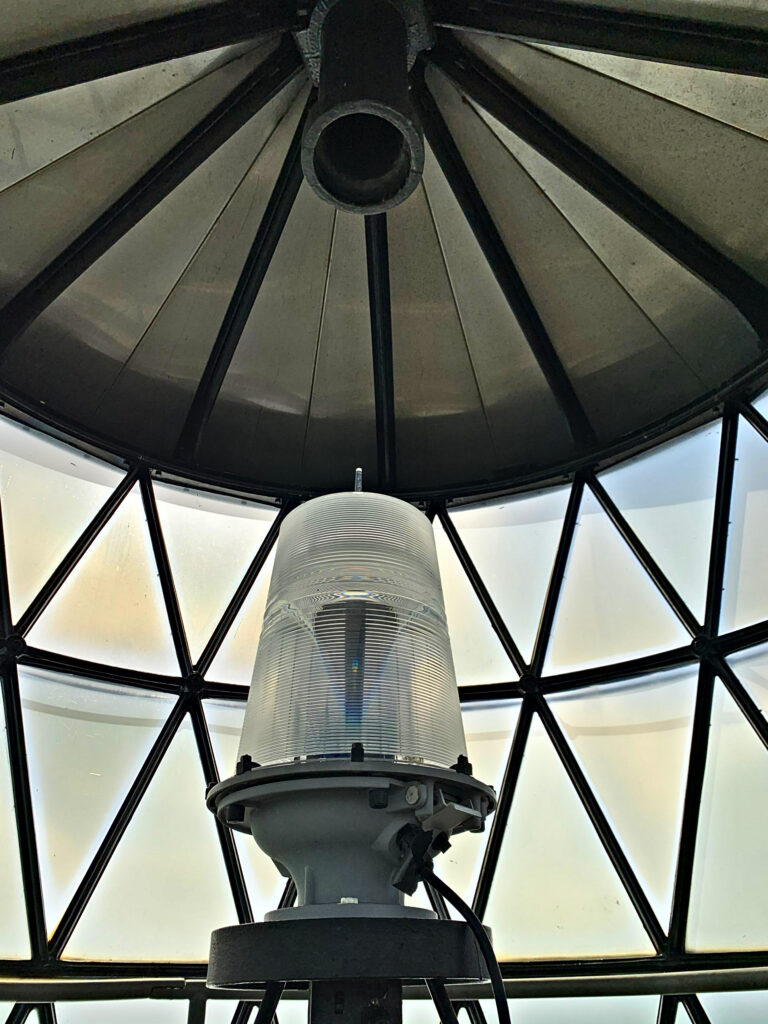
Beneath the picture-perfect views, trouble is brewing. 30 or so lighthouses survived nature’s brutal forces. Of these, a handful are facing a slower, more bureaucratic threat: being formally decommissioned.
Decommissioning a lighthouse simply means it no longer needs to guide ships. Its job is now done by GPS, radar, or a small automated light nearby. It doesn’t mean the lighthouse will be demolished. Once the Coast Guard declares a lighthouse surplus, the government first offers it free to a nonprofit, museum, or historical group willing to maintain it and keep it open to the public. If no one steps up, the government sells the structure at public auction. The sad part is that when the highest bidder buys a piece of maritime history, they have no obligation to preserve it.
Who Keeps Them Standing?
Keeping them standing after that point takes funding, legal stewardship, and volunteers willing to do the physical work. Eric Martin has spent more than two decades doing exactly that.
Martin serves on the board of the Florida Lighthouse Association and led the Florida Keys Reef Lights Foundation until it closed in 2023. The titles undersell the work. He helped push the “Visit Our Lights” license plate through the legislature so a small fee from every driver who chooses the plate could fund statewide lighthouse restoration.
How To Save a Lighthouse
His foundation bid on four offshore lighthouses in the Keys and lost all four. A single private buyer acquired three. And by Martin’s account, has done nothing with them. When he saw American Shoal in December, a hole gaped in the lantern room and all the glass was gone.
“Like any building, if repairs and maintenance are not done, the structure will fall.”
Funding and volunteers play a crucial role in undertaking preservation work. Martin has done the physical work. In 2005, he joined the board at Cape St. George Lighthouse, a five-and-a-half-hour drive from his Orlando home, and made the trip a dozen times over two years to help chip old mortar off the bricks of a tower that shoreline erosion had toppled. Salvaging them let the tower rise again largely from its own material.
“If you visit,” he says, “every brick you see is original.”
In Martin’s view, a decommissioned lighthouse belongs with “a lighthouse group or historic group.” These are historic buildings first, he says, and a dark tower is not a useless one. Even unlit, they still work as day marks for boaters, and on a full moon you can sometimes make out the silhouette against the water.
His advice to anyone exploring Florida is to go see them for themselves. “Over half are open to visit and climb,” he says, though some open only a few days a week and a few take a boat to reach. You can often spot the rest from shore with a zoom lens. “Some groups have more resources than others,” he says, and lighthouses in out-of-the-way places get fewer visitors and fewer supporters.
Why Visit a Florida Lighthouse Now
Theme parks and pristine beaches may make Florida a world-famous destination, but somewhere between the white sand, the Atlantic breeze, and the warm Gulf waters, a lighthouse watches out for you, waiting to be found. Look around and find the one that stuns you into falling in love, the way Cape Florida did for my family and me.
The good news is that visiting has never been easier. Florida’s mild winters make lighthouse season nearly year-round, and travelers have mapped out coastal road trips that string six or seven towers into a single weekend. For climbers, St. Augustine has 219 steps and a 44-inch minimum height; Ponce Inlet has 203 steps to Florida’s tallest tower; Cape Florida has 109; and Jupiter Inlet Lighthouse has 105 with a 48-inch minimum. Pensacola has 177, and the rebuilt Cape St. George, up in the Panhandle, has 92. Key West, rebuilt on higher ground after the 1846 hurricane, is the easiest to visit, with 88 steps and a keeper’s quarters museum at its base.
What These Lighthouses Could Mean To You
I’m glad we climbed the ones we did. Our list keeps growing, and the East Coast is next. We’ve already climbed Tybee Island Lighthouse in Georgia, and we hope to climb many more. I’m especially glad we started when we did, knowing how hard it is to keep these towers standing. Some are lit and loved, some sit dark in private hands, and all of them depend on people willing to keep showing up. When you find yours, take your kids, hold the handrail, and take it one step at a time.
How to Help (and Visit)
- Climb one. Over half of Florida’s lighthouses are open to visitors, and ticket sales help fund upkeep.
- Check before you go. Hours, height rules and tour schedules change, and a few lighthouses need a boat ride to reach.
- Visit the gift shop. Books and lighthouse passports help fund the museums and volunteers.
- Get the plate. Proceeds from the “Visit Our Lights” license plate go to the Florida Lighthouse Association, which funds restoration statewide.
- Join up. Become a member of the Florida Lighthouse Association or a local lighthouse group.
~ By guest blogger Shikha Das Shankar. Shikha is a feature writer for NRI Pulse who writes in-depth, human-interest stories about community, culture, and the people shaping them. After six years in South Florida, she now explores from Atlanta, taking her kids lighthouse hunting up the East Coast. Follow her on LinkedIn and Instagram.