
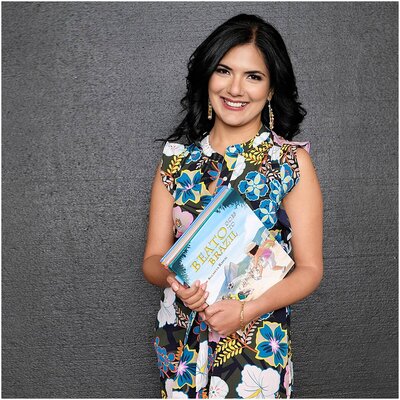
If you know me, you now have two degrees of separation from Nelson Mandela. During my visit to South Africa, I met two people who were close to him till his last days.
Outside my hotel in Cape Town, a friendly man came to see me. If I had passed him on the street, I would never have guessed he had once spent years guarding one of the world’s most famous prisoners. “Are you ready?” he asked in his heavy South African accent.
Instead of driving directly to the ferry terminal for my visit to Robben Island, he drove me to Cape Town’s Victoria & Albert Waterfront. He pointed toward the water where ferries still depart several times a day. For most visitors, it’s the gateway to one of South Africa’s most important historic sites. For Christo Brand, it had once been his daily commute to work.
As we sipped our coffee along the waterfront, Christo shared stories from a life few people could imagine. At just 19, he became one of Nelson Mandela’s prison guards on Robben Island. Over time, the young Afrikaner who had grown up under apartheid and the political prisoner the government called its greatest threat developed an unlikely friendship that would change both of their lives.
By the time we reached the ferry, I realized I hadn’t just met a former prison guard. I had met another person whose life had been transformed by Nelson Mandela. That conversation became one of the defining memories of my trip to South Africa.
More Than 67 Minutes
Every year on July 18, the world celebrates Mandela Day, honoring Nelson Mandela’s birthday. Established by the United Nations in 2009, the annual observance encourages people to dedicate 67 minutes of service to others, representing the 67 years Mandela devoted to fighting injustice and promoting human dignity. The idea is beautifully simple: everyone can make a difference through small acts of kindness.
Learn more about the initiative through the official Mandela Day.
Like many people, I admired Mandela long before I visited South Africa. I knew the history—the 27 years in prison, the end of apartheid, the Nobel Peace Prize, and his election as South Africa’s first Black president. But history books tell us what Mandela accomplished. Travel taught me who he was.
Over the years, I have visited Johannesburg several times, explored Mandela House in Soweto, where he lived with his family, and reflected on the sacrifices made inside those modest walls. I also stayed at the opulent Saxon Hotel, Villas & Spa, where Mandela completed much of Long Walk to Freedom after his release from prison. Sitting where he wrote one of the world’s most influential autobiographies offered another window into his remarkable journey. Yet it wasn’t until this particular encounter in Cape Town that I truly understood his legacy.
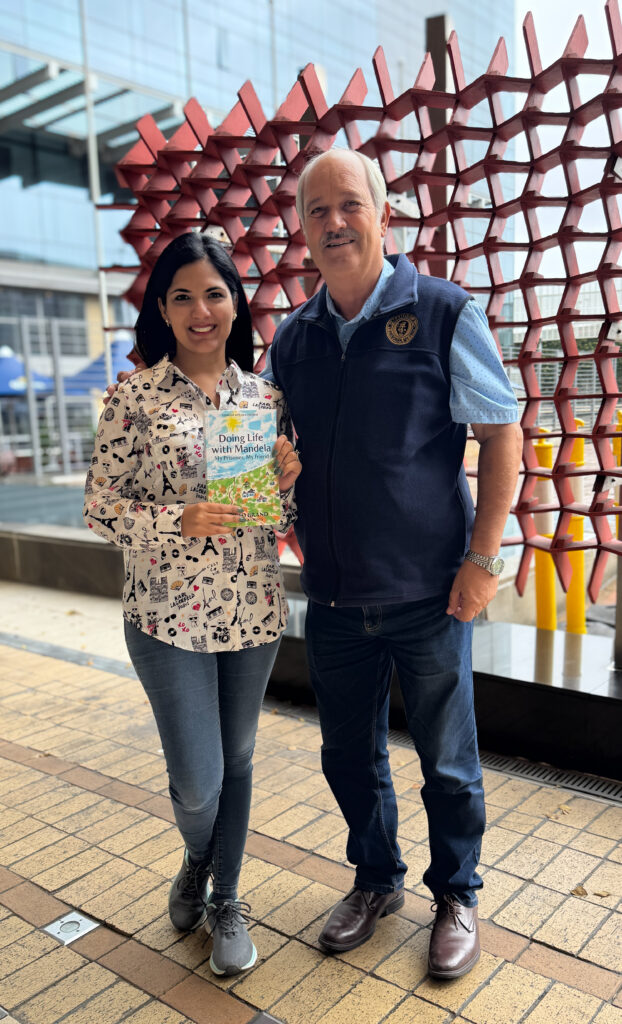
Walking with Christo Brand
Christo Brand’s memoir, Doing Life with Mandela: My Prisoner, My Friend, tells the remarkable story of a friendship few thought possible. I read his book the night before I met him and felt the stories unfold right in front of me. You know how you read a book and then go visit a place in real life?
Our conversation unfolded naturally as we walked toward the Robben Island Museum ferry terminal. Christo described arriving on Robben Island as a teenager who believed everything apartheid had taught him. Mandela, more than forty years older, never greeted him with bitterness. Instead, he treated him with dignity and respect. That simple act changed Christo’s life.
One story from his book stayed with me. Prison regulations prohibited physical contact during family visits, yet Christo allowed Mandela to briefly hold his young granddaughter, recognizing that compassion mattered more than bureaucracy. Throughout our walk, Christo kept returning to one lesson. Kindness dismantles prejudice. Mandela never tried to change people through anger. He changed them through patience, respect, curiosity, and quiet acts of humanity.
Sitting beside the harbor where Christo once boarded the ferry to prison every morning, I realized history isn’t always shaped by presidents and politicians. Sometimes it is shaped by two people choosing to see each other’s humanity.

“Good Morning, Mr. Mandela”
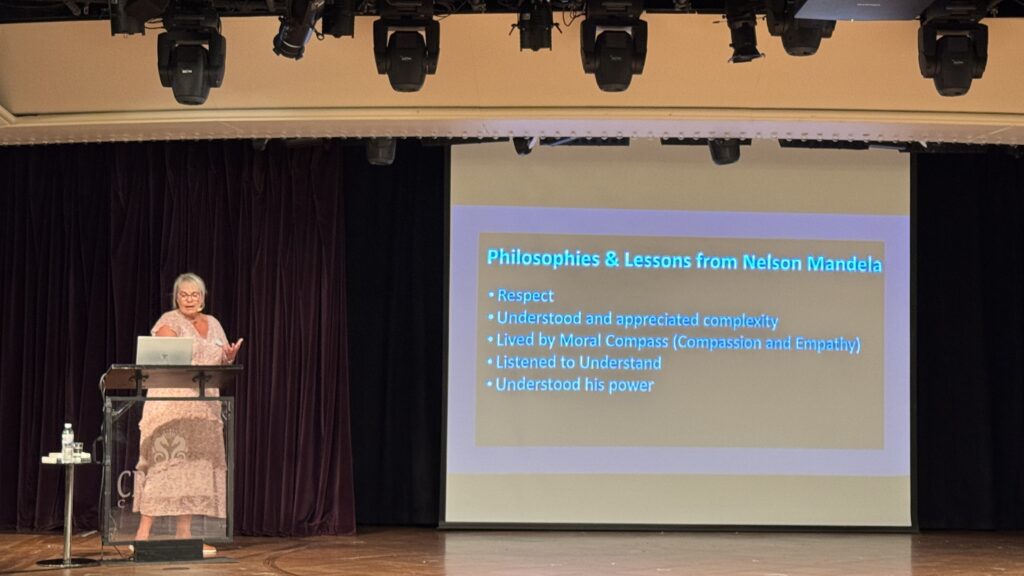
A couple of days later, I met another person whose life Mandela had profoundly shaped. Zelda La Grange served as Mandela’s personal secretary until the day he died.
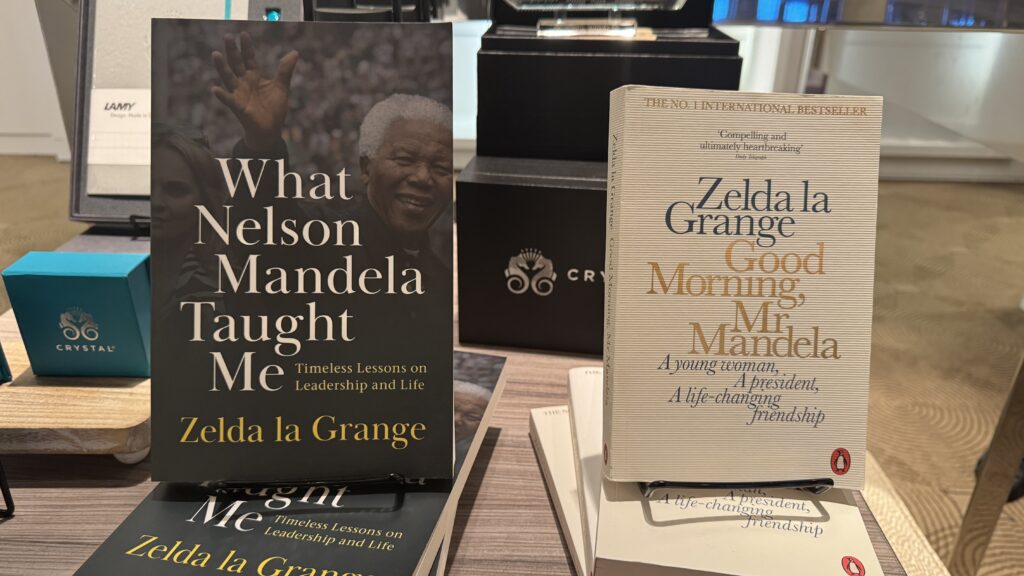
Onboard the Crystal Serenity cruise sailing from Cape Town to Accra, she spoke as part of the enrichment program, sharing stories that never make it into history books. Afterward, I read her autographed memoir, Good Morning, Mr. Mandela, along with What Nelson Mandela Taught Me.
In her book, she gave vivid personal accounts of how Mandela remembered names and greeted everyone—from presidents to housekeeping staff—with the same warmth. He listened more than he spoke, admitted when he was wrong, and made people feel seen. One lesson from Zelda’s books resonated deeply with me: Mandela believed changing the world begins with changing ourselves. Before criticizing others, we should examine our own assumptions, practice empathy, and seek understanding. Leadership, she reminded us, isn’t about commanding respect. It’s about giving it.
Following Mandela’s Footsteps
Looking back, I realize my travels through South Africa became a journey through Mandela’s life. Johannesburg introduced me to the activist. Mandela House showed me the husband and father. The Saxon Hotel reflected the elder statesman writing his legacy. Robben Island revealed the prisoner who refused to let hatred define him. And Christo Brand and Zelda la Grange introduced me to the human being whose humility transformed everyone around him.
The Mandela Day I Will Always Remember
Many people visit South Africa to see where Nelson Mandela lived or was imprisoned, but it was especially meaningful to meet two ordinary people whose lives were forever changed by one extraordinary man.
That’s what Mandela Day means to me. The tradition of giving 67 minutes is a wonderful place to start. But Mandela’s real legacy cannot be measured in minutes. It’s measured in how we treat the people we meet every day. As someone who has returned to South Africa several times, I thought I understood Nelson Mandela’s story. I had visited his home, walked through places that shaped his life, and even stayed in the hotel where he finished writing Long Walk to Freedom.
Yet it wasn’t the landmarks that stayed with me. It was two conversations. Both reminded me that greatness isn’t found only in speeches or political achievements. It lives in kindness. In humility, forgiveness, and seeing the humanity in someone who looks, thinks, or lives differently from us. That is the lesson I carried home from South Africa.
And it’s one worth practicing every day—not just for 67 minutes each July 18.