

Recently, I decided to stop eating on the flight.
If you are like me, you crave crunchy, salty snacks on long flights. Something to keep you busy while watching movies and give you a temporary high. You opt for sparkling water instead of a gin and tonic, thinking you are making a better choice. But you are doing it all wrong!
I’ve landed in places like Chengdu, Cusco, and Copenhagen feeling completely clear-headed—and I’ve also stumbled off flights bloated, dehydrated, and wondering why I thought that second glass of wine was a good idea at 35,000 feet.
After years of long-haul travel, I’ve realized this: what you eat and drink on a plane has far more impact than most people think. Not just on comfort during the flight, but on how quickly you recover, how well you sleep, and how present you are when you arrive.
This isn’t about being overly disciplined or skipping every indulgence. It’s about understanding how your body actually behaves in the air—and making choices that support it.
Why Flying Changes Everything
Flying is not a neutral environment, even though you may enjoy the experience. Your body is operating under completely different conditions than it does on the ground. As someone who flies up to 40 hours a month, an airplane seat is just like a second office to me.
Cabin pressure is equivalent to being at high altitude, and humidity levels drop drastically—often to desert-like conditions. That combination alone explains why your skin dries out, your throat feels scratchy, and you’re constantly reaching for water. Doctors consistently point out that dehydration is one of the most immediate effects of flying, and it starts sooner than you realize.
Then there’s digestion. Gas expands at altitude—by as much as 25%—which explains that uncomfortable bloated feeling mid-flight. Add in limited movement, irregular eating times, and often overly salty airline meals, and your system starts to feel off pretty quickly.
And one of the most surprising shifts? Your taste buds. At altitude, your sensitivity to sweet and salty flavors drops, while umami—savory, rich flavors—remains strong. That’s why tomato juice suddenly tastes incredible on a plane, even if you’d never order it on the ground.
Once I understood all of this, I stopped treating in-flight meals as an afterthought.
Hydration Is the First Priority
If there’s one rule I never break, it’s this: hydrate aggressively.
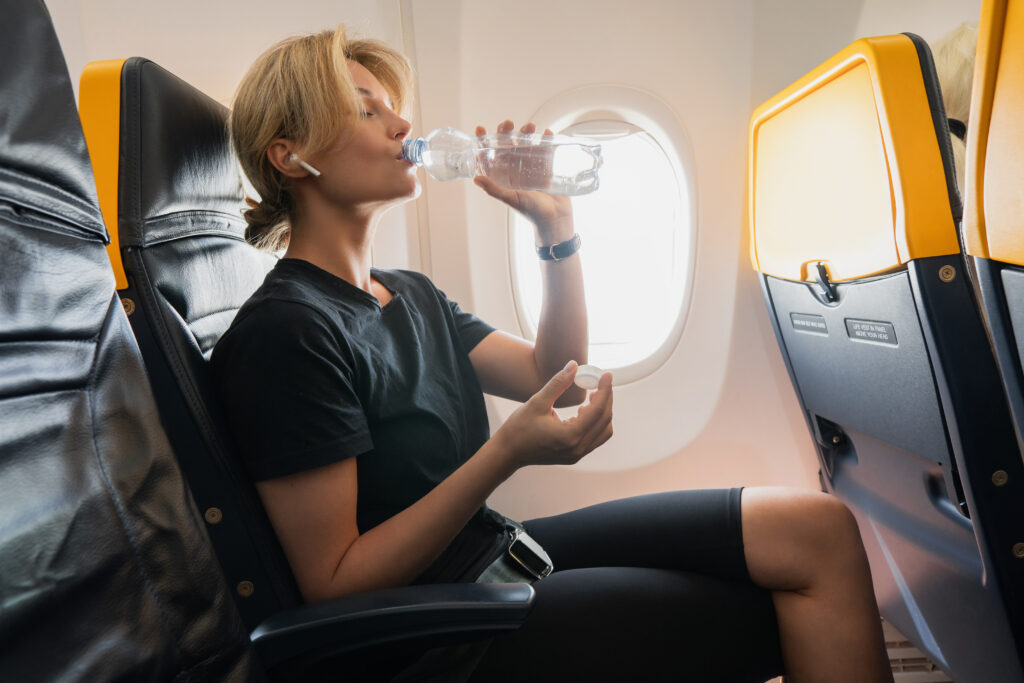
The dry cabin air is constantly pulling moisture from your body, and you don’t always feel thirsty until you’re already behind. On long-haul flights, I aim to drink water consistently throughout—far more than I would on the ground. Sadly, most flight attendants treat water as an occasional courtesy drink. My advice – fill your water bottle prior to boarding and request the flight attendant to refill your bottle instead of giving you small plastic cups and disposable bottles.
I’ve also started adding electrolytes, especially on overnight flights or when I’m heading straight into work. Coconut water or electrolyte packets help replenish what plain water alone sometimes doesn’t.
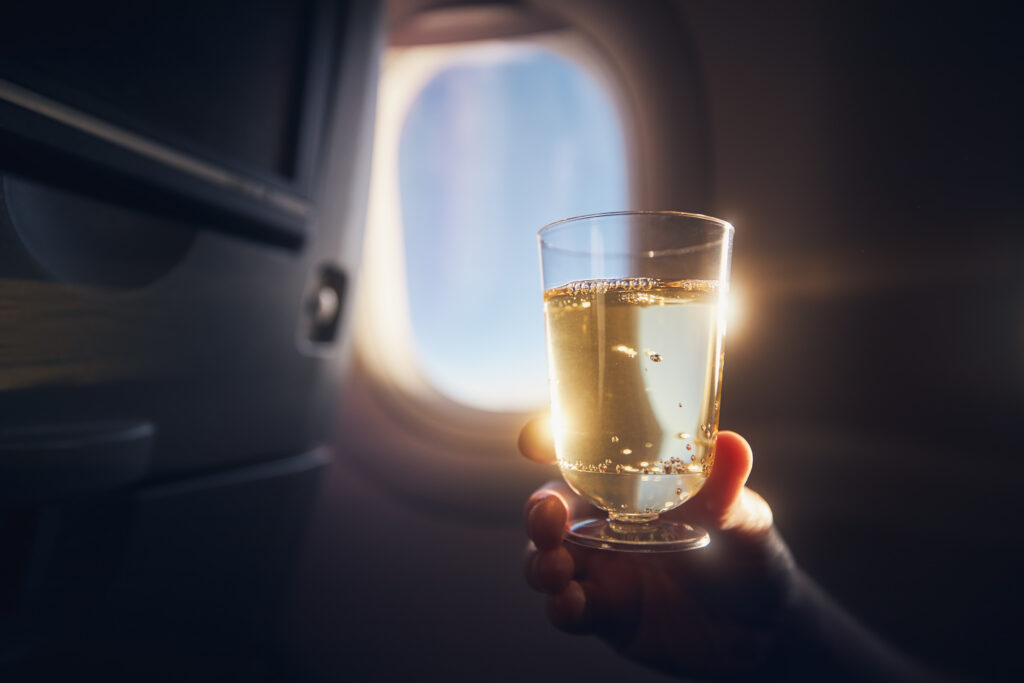
I’m not rigid about it—I’ll drink the welcome champagne on arrival, and yes, sometimes a glass of red wine with dinner, but I’m far more aware now of how quickly those choices can undo the balance. Alcohol hits harder in the air and contributes to dehydration and poor sleep, which only makes jet lag worse.
Eating Light Is Not About Dieting—It’s About Function
I used to think long flights were a time to indulge. You’re sitting still for hours, after all—why not enjoy the full meal service?
But I’ve learned the hard way that heavy, rich meals don’t sit well in the air. Your digestive system slows down, and foods that feel fine on the ground can leave you feeling sluggish and uncomfortable mid-flight.
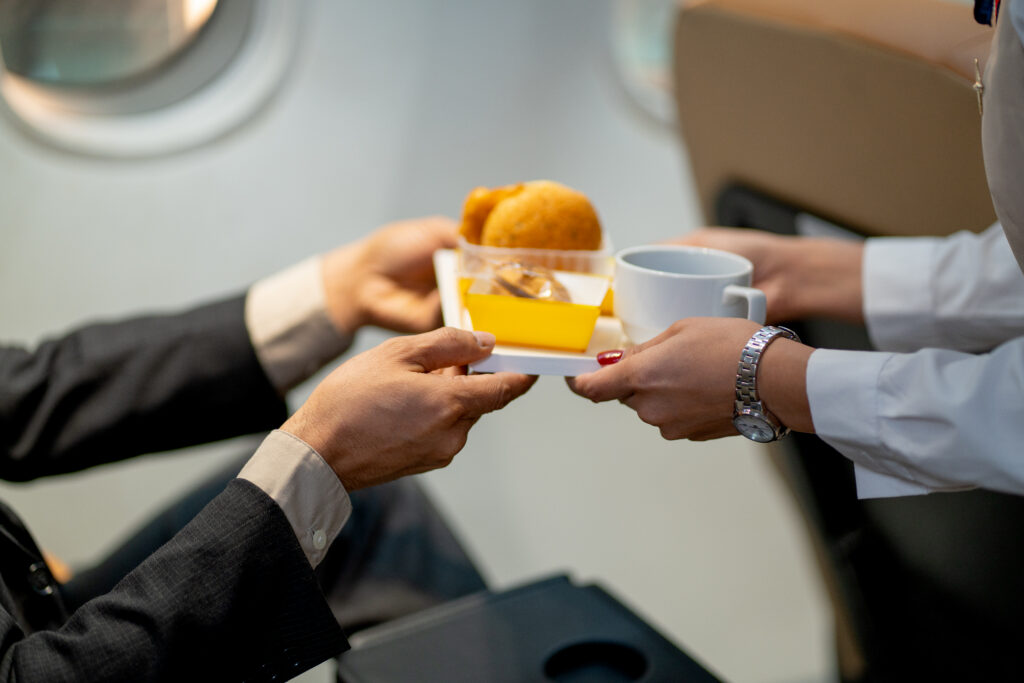
Now, I lean toward lighter, simpler meals—foods that are easy to digest and don’t rely on excess salt or fat for flavor. A grain bowl, a piece of grilled fish, yogurt with fruit—these are the kinds of things that keep me feeling steady rather than weighed down.
Bananas have become a go-to as well. They’re easy, they travel well, and the potassium helps balance fluids in your body, which is especially helpful when you’re flying. I also carry my own snacks – roasted edamame, nuts, raisins, and protein bars. I have packed home-made quinoa salads, oranges, and peanut butter and jelly sandwiches for the flight. Remember, as long as you don’t carry liquids, you can take your food through security. And you will need to discard any perishable items (fruits, vegetables, etc) prior to landing at international destinations.
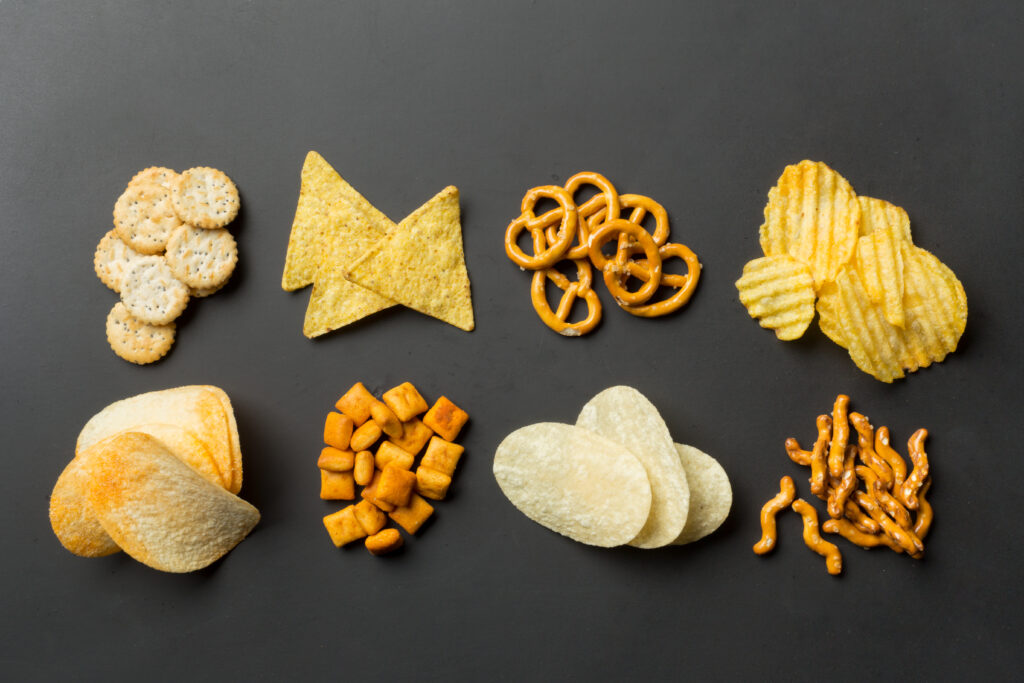
What I try to avoid are the usual suspects: overly salty snacks, fried foods, and anything that’s likely to cause bloating—carbonated drinks included. It’s not about restriction; it’s about knowing how I want to feel when I land.
Why Certain Foods Taste Better in the Air
This is something I’ve come to appreciate more recently.
Because your taste perception changes at altitude, foods that are rich in umami actually shine in the air. Tomato-based dishes, mushrooms, aged cheeses, even brothy soups—they tend to taste more satisfying and complete.
It explains why tomato juice is so popular on flights. It’s one of the few things that tastes exactly how it should, even at 35,000 feet.
When I have the option to pre-select meals, I often lean toward dishes that naturally have depth of flavor without relying on salt—Mediterranean-style meals, Asian broths, or anything with a good balance of acidity and richness.
Not All Airline Food Is the Same
One thing frequent flying teaches you quickly is that airline food varies widely—and it’s worth paying attention.
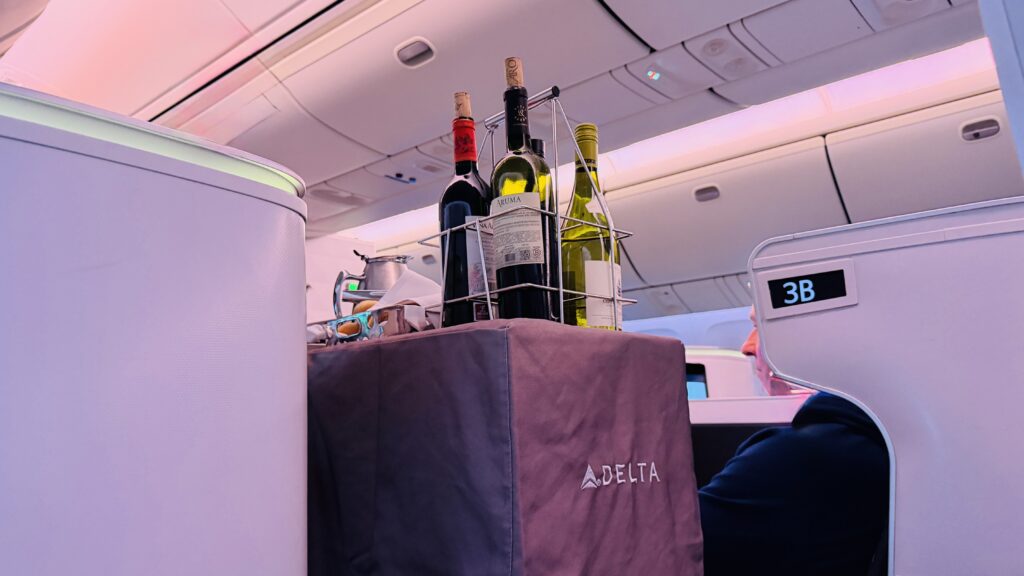
Some airlines are making a real effort to offer balanced, thoughtfully prepared meals. I’ve had surprisingly fresh salads on Delta Air Lines ‘East-to-West Coast legs, especially when pre-ordering. On Asian carriers like Singapore Airlines, lighter options like congee or steamed fish tend to be easier on the body and more aligned with how you actually feel in the air. And Middle Eastern carriers like Qatar Airways often incorporate fresh vegetables, lean proteins, and balanced flavors that don’t feel overly processed.
Whenever possible, I pre-select my meal. It’s one of the simplest ways to avoid ending up with something overly heavy or sodium-laden. Remember, you can also pre-order “fruit-only.”
Eating for Jet Lag, Not Just Hunger
Jet lag isn’t just about sleep—it’s about rhythm. Your body clock gets disrupted, and your eating patterns play a bigger role than most people realize.
On overnight flights, I’ve started eating earlier in the journey, keeping the meal light, and then skipping the second service if I can. It helps signal to my body that it’s time to rest, rather than digest.
When I land, I try to eat something fresh and aligned with the local time—no matter how tired I am. It’s a small shift, but it helps reset my system faster than anything else.
The Small Rituals That Make a Big Difference
Over time, I’ve developed a few habits that travel with me everywhere.
I always carry a refillable water bottle and electrolyte packets. I bring simple snacks—nuts, fruit, sometimes a piece of dark chocolate. Not because I don’t trust airline food, but because having control over a few choices makes a big difference.
More than anything, I’ve learned to be intentional. To eat when I’m actually hungry, not just because a tray is placed in front of me. To skip what doesn’t serve me. To think about how I want to feel when I land—not just how something tastes in the moment.
The Bottom Line
Flying puts your body under subtle but real stress. The food and drink choices you make in the air can either amplify that, or help you move through it with ease.
For me, the goal isn’t perfection. It’s arriving in a new destination feeling clear, energized, and ready to engage—whether that means heading straight into reporting, exploring a market, or sitting down for a meal that truly deserves my attention.
Because after traveling to 130+ countries, I’ve learned that how you arrive matters just as much as where you go.