

Know how to eat? It sounds like a rudimentary task that we are born knowing. So why do you need to travel to Mexico to learn it?
As a food and travel writer, I’ve spent more than two decades training my palate. I can identify spices in a curry, tell you whether a croissant was laminated properly, and describe the subtle minerality of a wine after a single sip. I’ve eaten in Michelin-starred restaurants, bustling street markets, and family kitchens in more than 130 countries. My career has been built on paying attention to food.
Or so I thought.
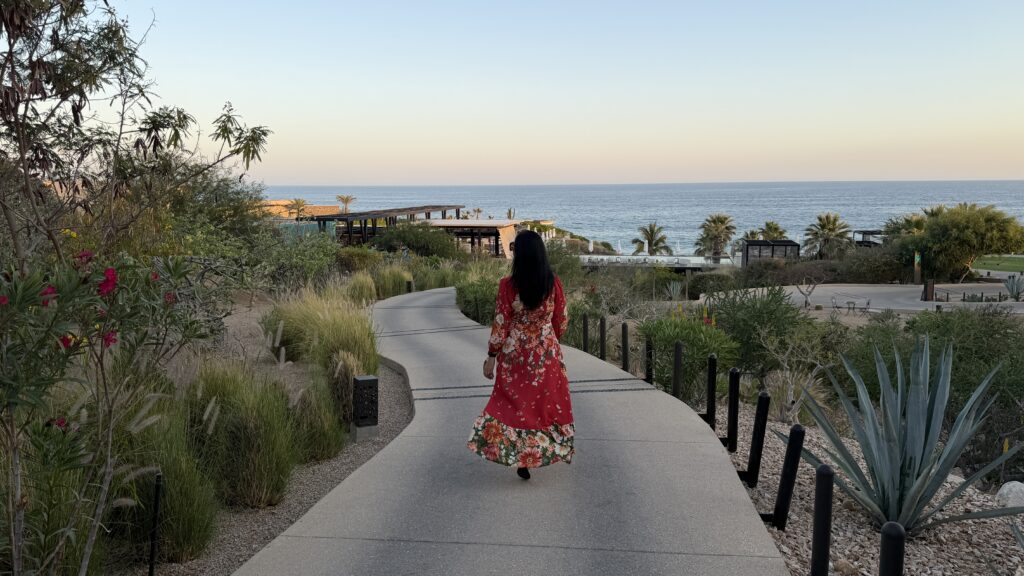
It wasn’t until I sat down for a Sensory Eating session at Sensei at Zadún, a Ritz-Carlton Reserve in Los Cabos, Mexico, that I realized I had been missing perhaps the most important ingredient of all: myself.
The irony wasn’t lost on me. Here I was, someone who makes a living writing about food, learning how to eat from scratch.
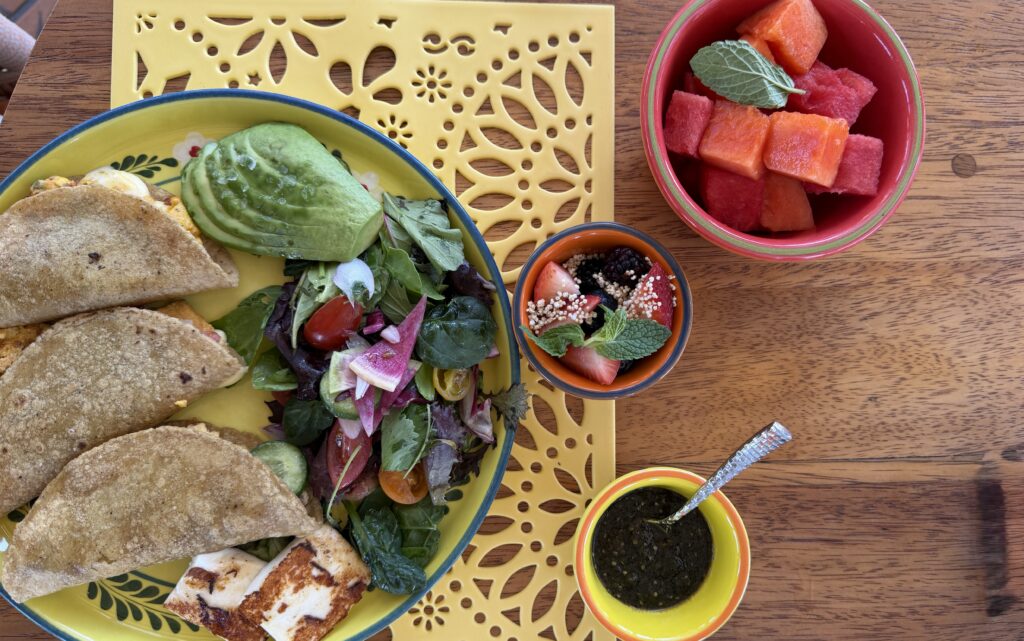
Why Mindful Eating Changed the Way I Experience Food
The lesson began before a single bite reached my mouth.
My nutrition guide, Monse Montana, asked me to simply look around. Sunlight filtered through the restaurant, casting warm shadows across handcrafted ceramics and natural wood. A gentle breeze carried the scent of the sea mixed with freshly grilled vegetables and herbs from the kitchen. The open-air space buzzed softly with conversation, clinking glasses, and the rhythmic sounds of cooks plating lunch. Instead of rushing to the menu or reaching for my phone, I noticed where I was.
Then she asked a question I had never considered before a meal.
“How hungry are you?”
Not “What do you want to eat?” or “Are you ready to order?”
On a scale from one to ten, how hungry was I really?
It sounds simple, but I realized I often eat because it’s lunchtime, because I’m traveling, because I’m conducting research, because everyone else is eating, or because I’ve just photographed a beautiful plate. Rarely do I stop to ask whether my body is actually asking for food.
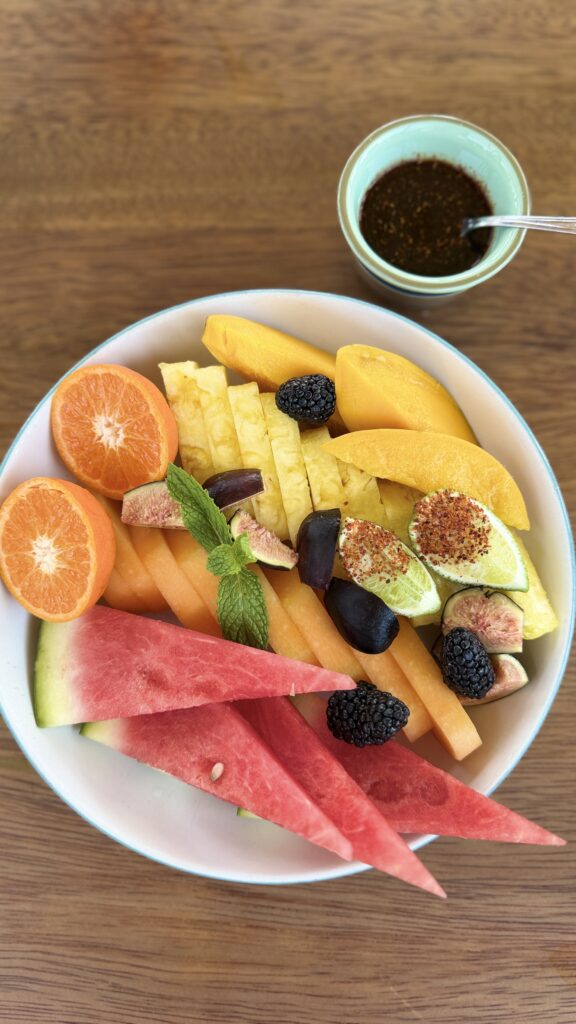
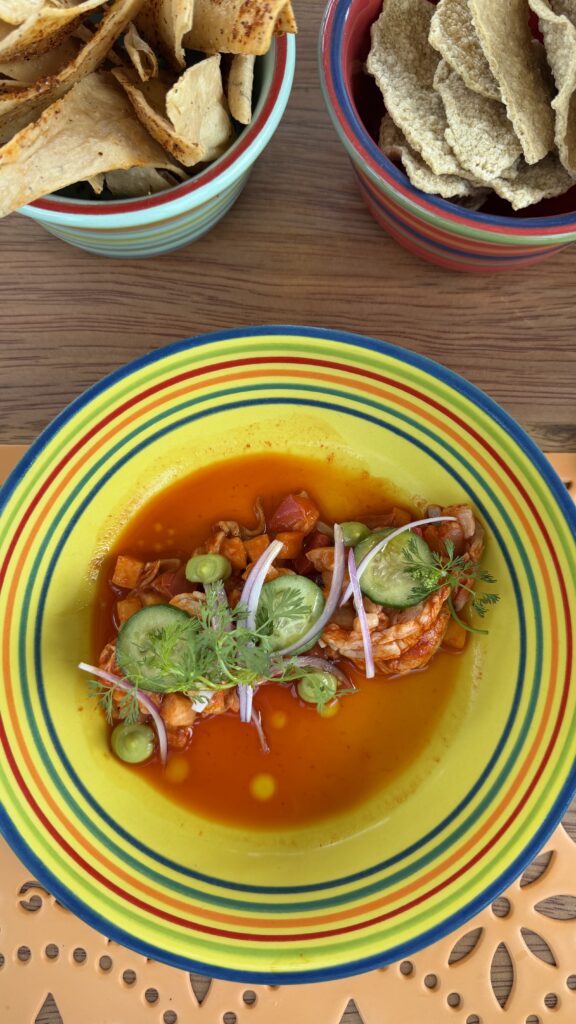
Eating With All Five Senses
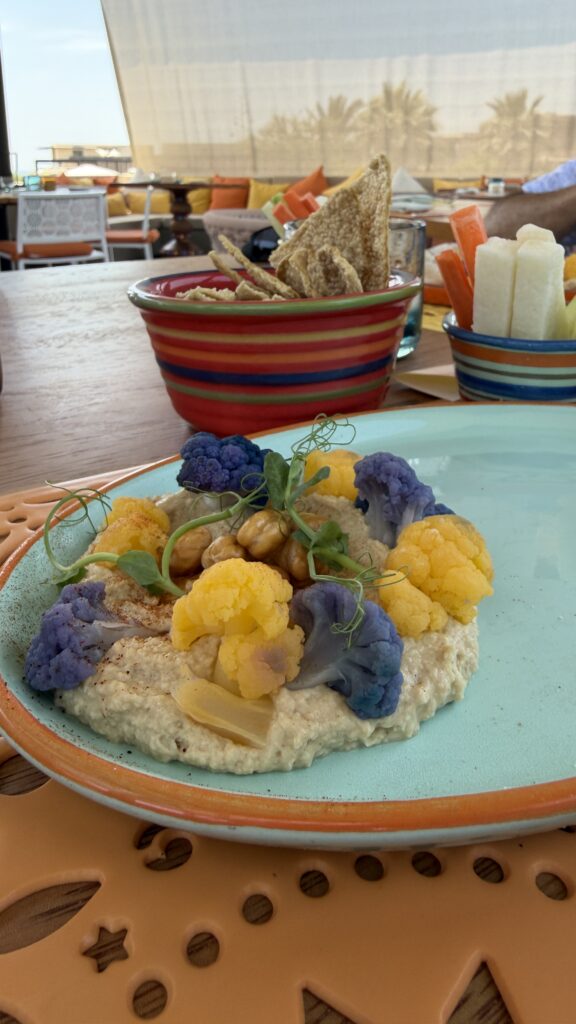
When the dishes arrived at Barrio restaurant in Los Cabos, Mexico, they looked almost too beautiful to disturb.
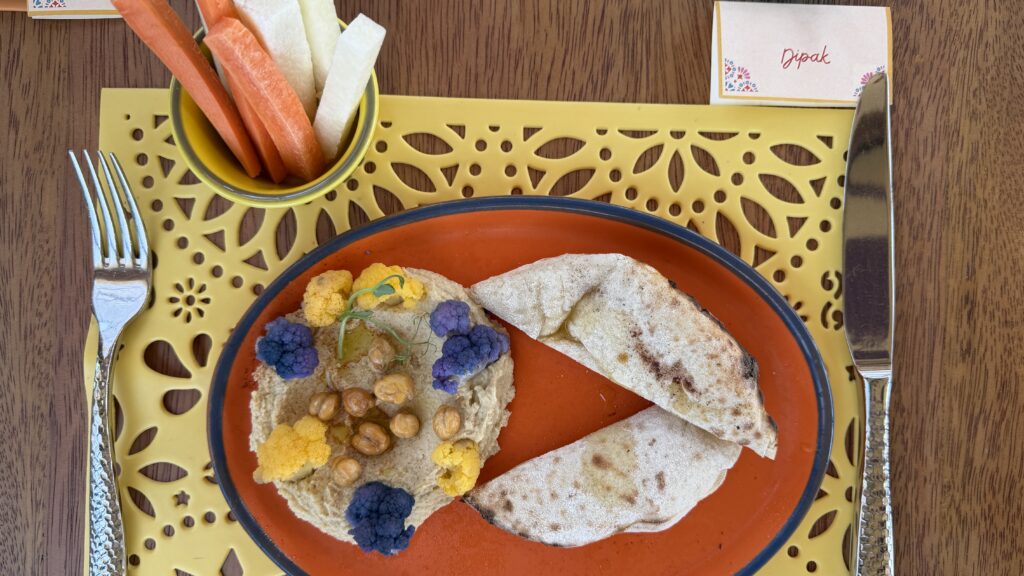
Creamy hummus was surrounded by colorful carrots, crisp jicama, toasted chickpeas, delicate microgreens, herbs, edible flowers, and warm vegetables that reflected Baja’s seasonal bounty. Every color seemed brighter because I was actually looking instead of immediately taking the first bite.
Monse encouraged me to pair the hummus with different accompaniments.
The sweetness of the carrots softened its earthiness. Jicama added a refreshing crunch. Toasted chickpeas echoed the hummus while introducing a nutty crispness. Tiny herbs changed the finish entirely. The same hummus became a completely different experience with every bite.
As someone who spends her life describing flavors, I was surprised by this. I wasn’t tasting more food—I was tasting more possibilities.
The Surprising Exercise That Slowed Me Down
Then came the exercise that felt downright awkward: eating with my non-dominant hand. I laughed at first, and my initial attempt nearly missed my mouth, but within seconds, I understood the purpose. My brain could no longer operate on autopilot, and every movement required intention. I slowed down naturally, chewed longer, and paid closer attention, realizing that I wasn’t simply consuming lunch—I was truly experiencing it.
How Mindful Eating Improves Digestion and Overall Health
The science behind the practice is compelling. The way we eat can influence digestion, nutrient absorption, blood sugar regulation, and even how satisfied we feel after a meal.
When we slow down, we give our brains time to recognize fullness. Thorough chewing mechanically breaks food into smaller particles, helping digestive enzymes work more efficiently. Eating in a relaxed state activates the parasympathetic nervous system—our body’s “rest and digest” mode—allowing digestion and nutrient absorption to function the way they’re designed to.
Stress does the opposite.
As Monse explained, our bodies don’t distinguish between an urgent email and a tiger chasing us. In both situations, the nervous system shifts into fight-or-flight mode, diverting energy away from digestion. It’s hardly surprising that so many of us finish meals feeling bloated, uncomfortable, or somehow still unsatisfied.
Understanding Emotional Hunger vs. Physical Hunger
Perhaps the most valuable lesson had nothing to do with food but with understanding cravings. Monse encouraged me to pause whenever a craving arises and ask myself what is really driving it—whether I am physically hungry or responding to something else, such as fatigue, boredom, stress, loneliness, or even celebration. That moment of reflection helps distinguish between emotional and physical hunger, reminding me that sometimes the answer is food and sometimes it isn’t. This simple practice of pausing has become one of the most practical and lasting wellness tools I’ve taken home.
How to Practice Sensory Eating at Home
You don’t need a luxury wellness resort to experience the benefits of mindful eating.
Before your next meal:
- Take three to five slow, deep breaths.
- Rate your hunger on a scale of one to ten.
- Put away your phone and turn off the television.
- Notice the colors, aromas, textures, and sounds around you.
- Put your fork down between bites.
- Chew each bite 20 to 30 times.
- If you want to make it playful, try eating with your non-dominant hand or chopsticks.
And if you’re sharing a meal with family or friends, enjoy the conversation. Unlike scrolling through social media or answering emails, meaningful connections nourish us, too.
A Lesson I’ll Carry to Every Table
As a travel writer, I’ve always believed food tells the story of a destination. It reflects history, geography, agriculture, and culture. That’s still true.
But after my time at Sensei at Zadún, I discovered that every meal also tells a story about ourselves.
How we eat may matter just as much as what we eat.
Whether your goal is to lose weight, improve digestion, reduce stress, manage emotional eating, or simply find more joy in everyday meals, sensory eating offers something refreshingly uncomplicated. It doesn’t require counting calories, following the latest diet, or buying expensive ingredients.
It simply asks us to be present.
For someone who has spent a lifetime chasing the next remarkable meal around the world, learning to fully appreciate the one right in front of me may have been the most meaningful culinary lesson of all.
At Sensei at Zadún, a Ritz-Carlton Reserve in Mexico, I discovered that mindful eating isn’t about dieting—it’s about using all five senses to improve digestion, reduce stress, and enjoy every meal.